

Les Rubin Warns America’s Debt Crisis Is Nearing a Breaking Point
Economic Education for the American Public
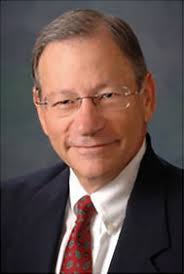
Leslie A. Rubin, Founder and President, Main Street Economics
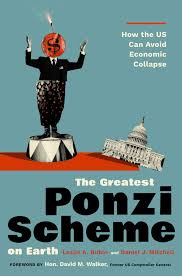
The Greatest Ponzi Scheme on Earth: How the US Can Avoid Economic Collapse
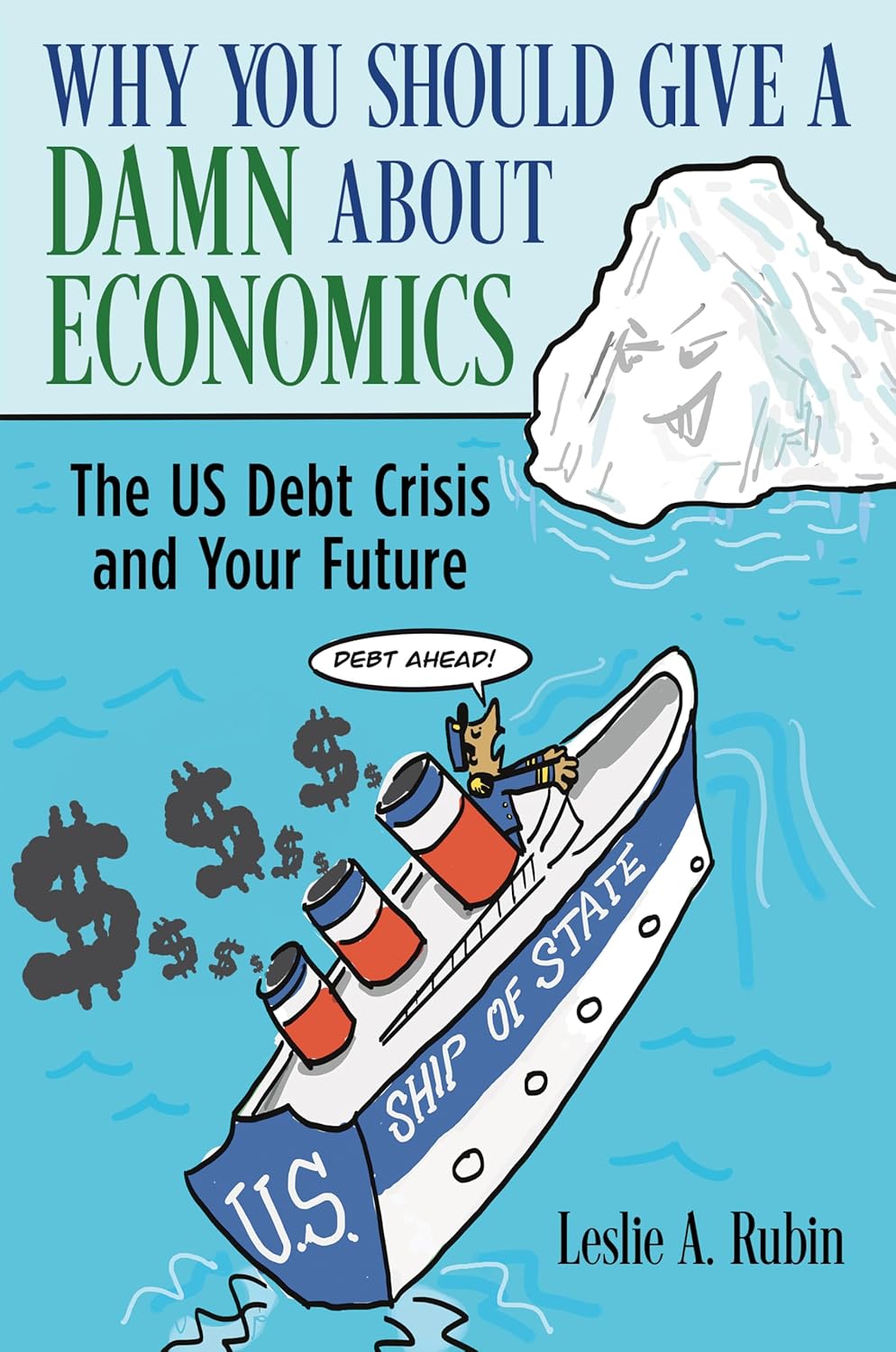
Why You Should Give a Damn about Economics: The Us Debt Crisis and Your Future
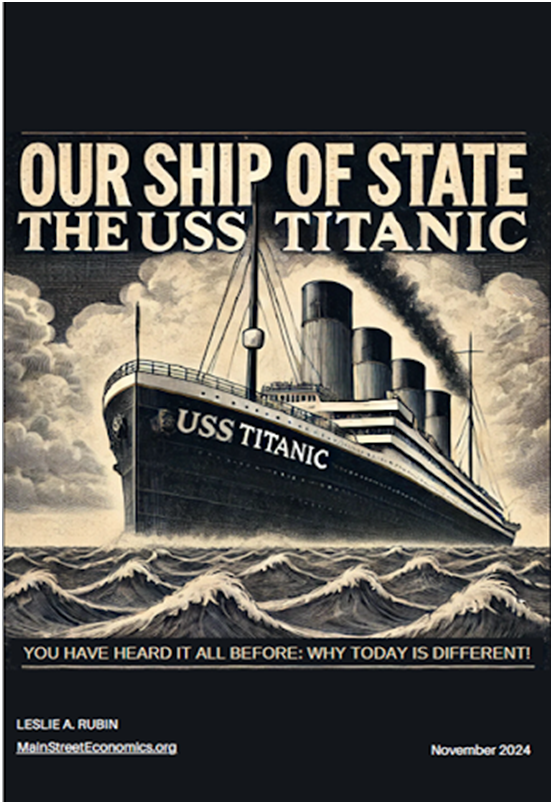
Our Ship of State
Please Don’t Make Me Say: ‘I Told You So’
Rubin has spent years warning that the United States is moving toward a fiscal cliff. His latest appeal, titled “Four Words I Never Want to Say: I Told You So,” offers a deliberately personal and direct warning about the consequences of continued borrowing, spending and postponement of difficult decisions.
Rubin’s warning points to the nation’s more than $40 trillion national debt, persistent annual deficits, the growing gap between promised Social Security and Medicare benefits and available funding, and projected depletion of the programs’ trust funds in the coming years.
“In 2020, I warned that the national debt was becoming a big problem,” Rubin said. “Today, the national debt has passed $40 trillion, representing approximately 125% of our national output, GDP, and putting the nation in a very dangerous zone.”
Rubin also warned in 2023 that federal deficits were becoming unsustainable. Current projections call for annual deficits of $2 trillion to $3 trillion, with the potential for those deficits to continue indefinitely.
“The projections for the future are deficits of $2 trillion to $3 trillion every year forever, climbing at an unsustainable pace,” Rubin said. “The projections are also optimistic because they do not fully account for the potential impact of new government programs, war, recession and other unforeseen events. The actual situation could be significantly worse.”
The long-term obligations of Social Security and Medicare present another significant concern, Rubin said.
“I have warned that the promises made for future Social Security and Medicare benefits exceed the funding available to pay them by approximately $86 trillion,” Rubin said. “Those numbers can seem so large and complicated that it is tempting to look away. But the underlying problem does not disappear simply because it is difficult to understand.
Rubin has also warned that the Social Security and Medicare trust funds are projected to face depletion in 2032 and 2033, potentially requiring significant changes to benefits or additional funding.
“The response cannot simply be, ‘Trust the government. They will not let this happen,’” Rubin said. “The responsibility belongs to the American people as well. Voters can demand that elected officials address these problems before a crisis forces decisions under much worse circumstances.”
Rubin describes the nation’s growing reliance on new borrowing as a dangerous cycle.
“The debt has become a giant Ponzi scheme, requiring larger new debt sales every year to pay maturing debt and cover large deficits,” Rubin said. “That is not a sustainable path. At some point, the numbers stop working.”
Rubin rejects the suggestion that the United States is too strong or too wealthy to face the consequences of a fiscal crisis.
“Some people say, ‘We are the strongest country in the world, and nothing can harm us,’” Rubin said.
“History does not provide that kind of guarantee. If the financial system collapses, the consequences could reach far beyond government budgets. The economic world Americans have known could be dramatically altered, with devastating consequences for families, businesses and future generations.”
The central message of the appeal is that public pressure remains the key to changing the nation’s fiscal trajectory.
“A few brave souls in Congress dare to cry out against this, but their voices are often lost in the noise of Washington, D.C.,” Rubin said. “The American people must listen, learn and act while there is still time.”
Rubin argues that voters have an important role in changing the political incentives surrounding fiscal policy.
“The message to elected representatives cannot continue to be, ‘Do not change these programs or I will vote for someone else,’” Rubin said. “The message needs to become, ‘You must fix this problem, or I will vote for someone who will.’ That is a 180-degree change, and it will only happen if Americans wake up to reality, understand the problems and demand change before it is too late.”
The appeal invokes President Abraham Lincoln’s observation that public support is essential to accomplishing difficult tasks.
“President Lincoln was right: ‘With public support you can get anything done, without it, you can get nothing done,’” Rubin said.
Rubin said the purpose of the warning is not to claim victory in a debate, but to prevent the prediction from becoming reality.
“The point of this plea is not to be able to say ‘I told you so,’” Rubin said. “The point is to make sure those four words never have to be said.”
Rubin added, “The choice ultimately belongs to the American people. The United States can continue telling itself that the problem is too complicated, too distant or too difficult to solve, or the country can demand that its leaders confront the problem while there is still time.”
###
About Main Street Economics
Main Street Economics was formed to provide Economic Education for the American public. We focus on explaining the fiscal problems we face and basic economics in easy-to-understand language by laymen for laymen without formal education in economics. For more information on Main Street Economics and its initiatives, please visit https://www.mainstreeteconomics.org/
To schedule an interview with Les Rubin, please contact Dan Rene at 202-329-8357 or dan@danrene.com.
Dan Rene
Dan Rene Communications
+1 202-329-8357
dan@danrene.com
Visit us on social media:
X
Legal Disclaimer:
EIN Presswire provides this news content "as is" without warranty of any kind. We do not accept any responsibility or liability for the accuracy, content, images, videos, licenses, completeness, legality, or reliability of the information contained in this article. If you have any complaints or copyright issues related to this article, kindly contact the author above.
